
With approximately 18.5 million passengers travelling through Auckland Airport each year, there is the potential to generate significant quantities of waste from areas such as the foodcourts, lounges, security screening processes and shopping areas. Having a coordinated approach with terminal stakeholders is critical to minimising the waste we send to landfill.
Strict biosecurity requirements greatly impact how we can manage our waste at Auckland Airport. Prevention is key, so we are implementing solutions to avoid waste from the outset, such as educating travellers ahead of their journey on what can pass through security and what can’t, and diverting ‘good’ items, such as lost property and batteries to charitable purposes.
We are actively working with our partners to recover resources effectively, which includes a composting programme that aims to collect all food waste generated at the airport terminals, and we are hand separating out recyclables from airline cabin waste in our Transitional Waste Facility.
We’re committed to reducing waste and optimising resource use throughout our operations, with an overarching vision to cultivate a circular airport precinct.
Our target is to reduce waste to landfill by 20% by 2030, compared to a 2019 baseline. We are on track with this target, however as passenger numbers are anticipated to grow, more work is required to be done, and we are actively working on initiatives to further reduce our waste.
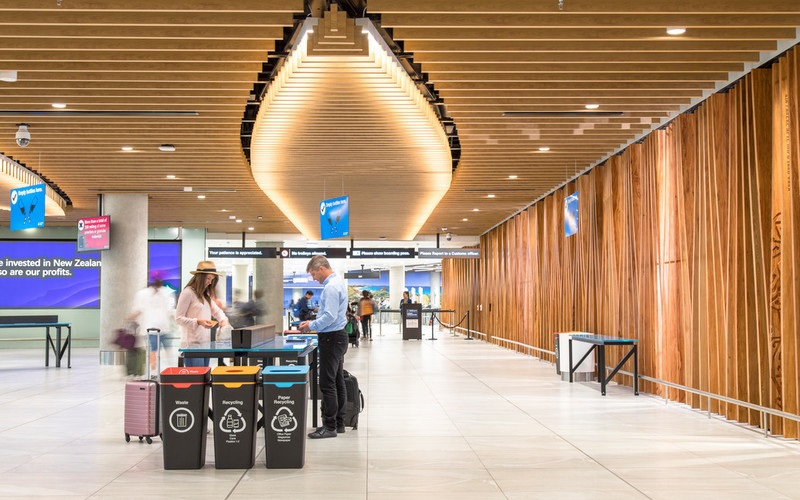
Removing hand towels
In December 2023, we commenced a programme to update our public bathrooms, starting in the Domestic Terminal. During the design phase of the refreshed bathroom areas, it was identified installing a hand drier in lieu of paper towels would offer significant waste reduction benefits.
This was trialled in the Domestic Terminal and once satisfied that the system was working well, the initiative was expanded to bathrooms across the terminals and offices areas. Parent and disabled bathrooms still offer a hand towel option.
By replacing paper towels with energy efficient jet air hand dryers, we are reducing waste to landfill by 3 tonnes per month.
Battery Donation
Auckland Airport, in partnership with Hi Tech Services, is diverting thousands of confiscated batteries from landfill and donating them to local charities through Kiwi Harvest. These batteries, often brand new, are removed from checked luggage for safety reasons and now find new purpose in schools and community groups.
Around 100kg of batteries are donated each month, helping organisations like Accelerating Aotearoa and Baverstock Oaks School. Judith Speight, CEO of Accelerating Aotearoa, says: “It’s fantastic to see the joy when donated toys and electronics come with batteries included.” Teacher Helen Dibley adds: “This was like battery Christmas for us!”
Giving lost items a new home
With more than 50,000 travellers passing through daily, it is no surprise that countless items are left behind at Auckland Airport’s terminals. We work hard to reconnect lost property with customers, however, can’t always match items left behind in our terminals with their owners.
Items such as toys, shoes, clothes, books, homewares, car seats, prams, pillows, blankets, sporting gear, etc that remain unclaimed are collected by community-based organisation Māngere East Family Services (MEFS).
They do an amazing job of washing and sanitising the items and matching them with new owners, supporting families in need in their local communities of Māngere and Ōtāhuhu.
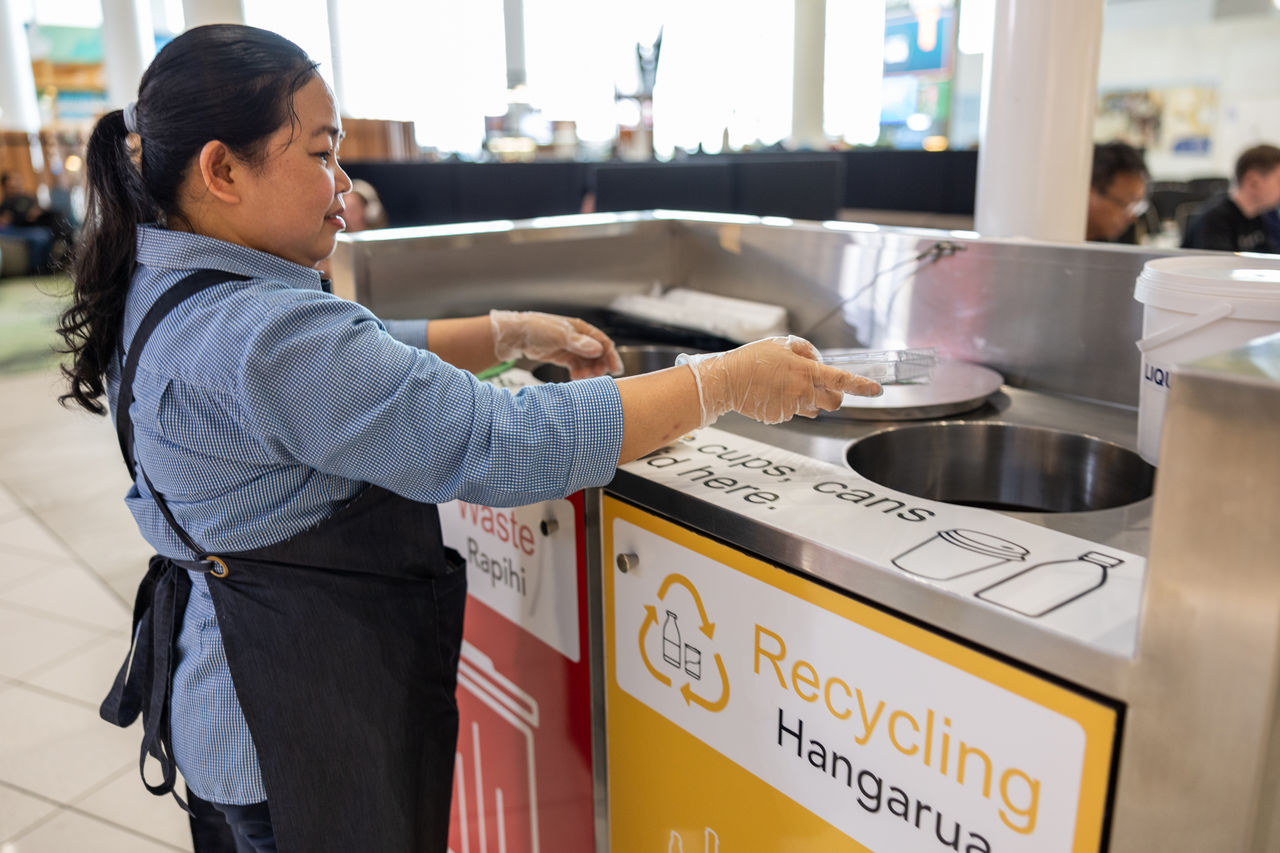
Composting
When you grab coffee and a snack at Auckland Airport, you can do so knowing there are positive plans in place to tackle the challenge of waste.
Coffee grinds, food scraps and even compostable cups will be put to good use, with the airport expanding its landside (public areas of the airport terminal before you pass through security and passport control) food waste composting scheme at the domestic terminal to now include some parts of the landside food and beverage areas of the international terminal.
Food waste collection started in the domestic terminal late last year and has grown to include food waste from six food and beverage operator kitchens and the public eating areas inside and outside the food court.
Now, with the addition of food waste collection from kitchens and back-of-house areas supporting the eight landside food and beverage businesses in the international terminal, the airport is expected to at least double its current volume of food waste away from landfill.
The food waste is collected and sent to Tuakau-based Envirofert, where it is repurposed as 100 per cent organic compost used by fruit and vegetable growers in Pukekohe, Waikato and the Bay of Plenty as well as Kiwifruit orchards on the East Cape.
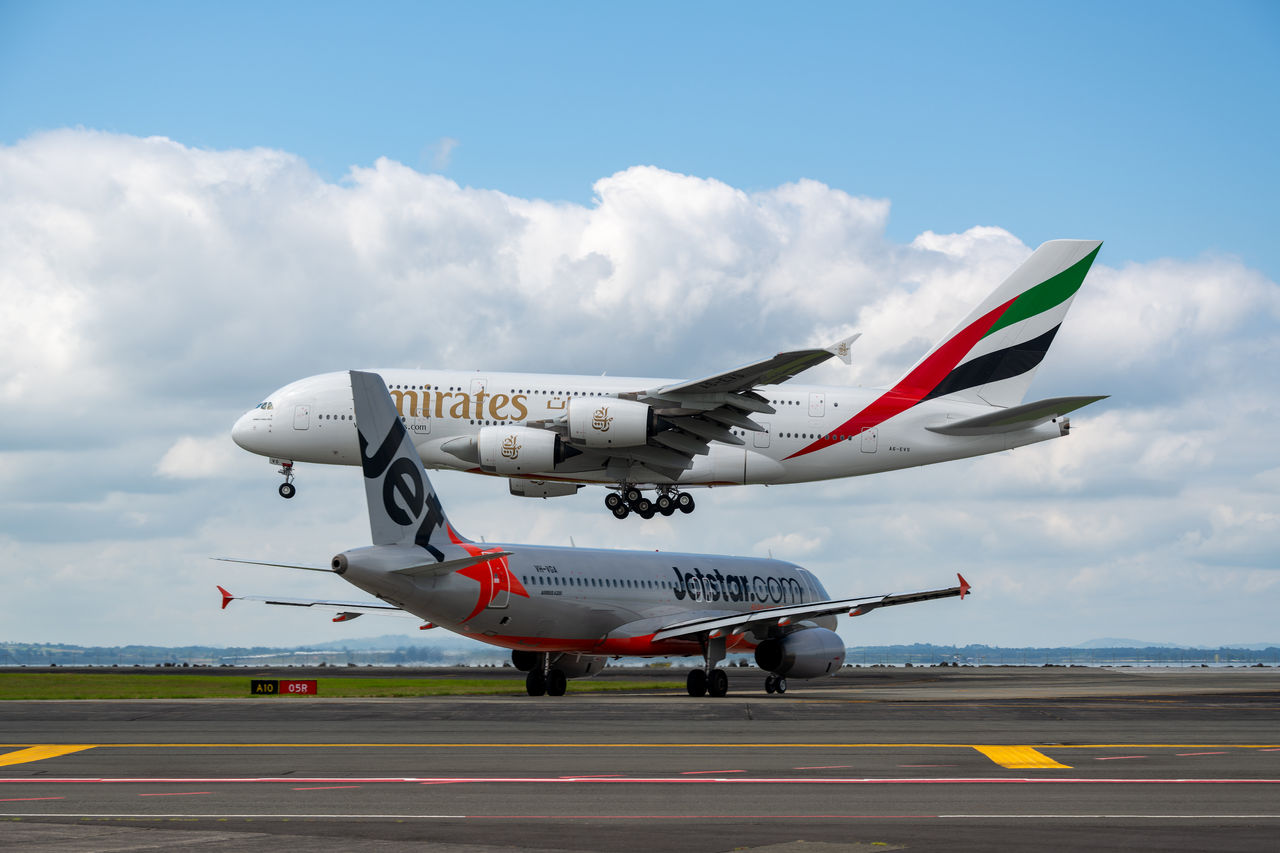
Diverting waste from airlines
As Auckland Airport is underway with the most significant upgrade in its history, it’s progressing on sustainability initiatives that will have a meaningful impact across the aviation precinct.
This includes a $5 million transitional waste facility that processes waste from international flights, airline lounges, as well as all waste from the domestic terminal (including waste from retailers, terminal rubbish bins, restrooms and food waste) and airside waste from the international terminal.
The facility is double the size of its predecessor and being a centralised facility, supports better collaboration between airlines, border agencies and waste services providers to improve the pathway of waste and increase recycling volumes.
In particular, huge improvements have been made in the treatment of what amounts to close to 100 tonnes of airside waste (largely from airlines) each month, which had previously all been sent to landfill.
The new purpose-built facility will see waste hand-sorted to divert low-risk, clean recyclables from biosecurity treatment and landfill disposal.
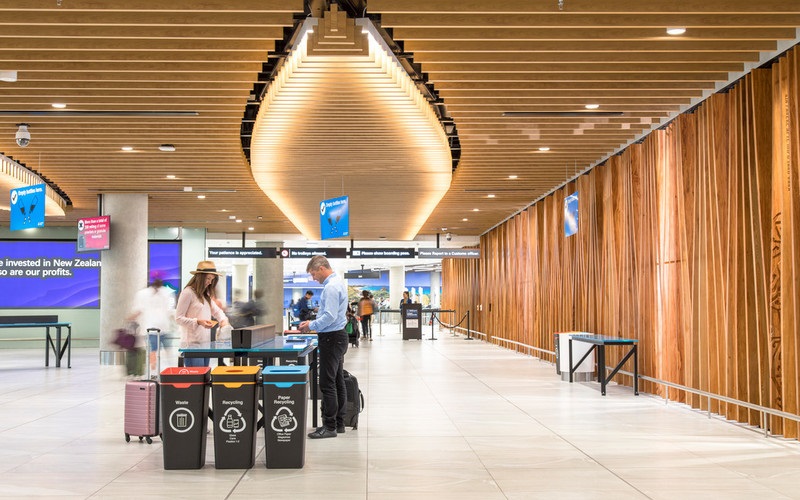
Uniform recycling
Many staff at Auckland Airport are required to wear uniforms or personal protective equipment (PPE) as part of their role. We know that textile waste is one of the fastest growing waste streams globally and we have therefore partnered with ImpacTex to ensure that our uniforms and PPE stay out of landfill.
Uniforms and safety gear from across the business – including Airport Emergency Services, Operations, Security, Parking, Customer Service, Wildlife and Engineering Services departments, are collected and go through a secure process before being shredded and turned into 100% recycled panels.
Recycling airfield concrete
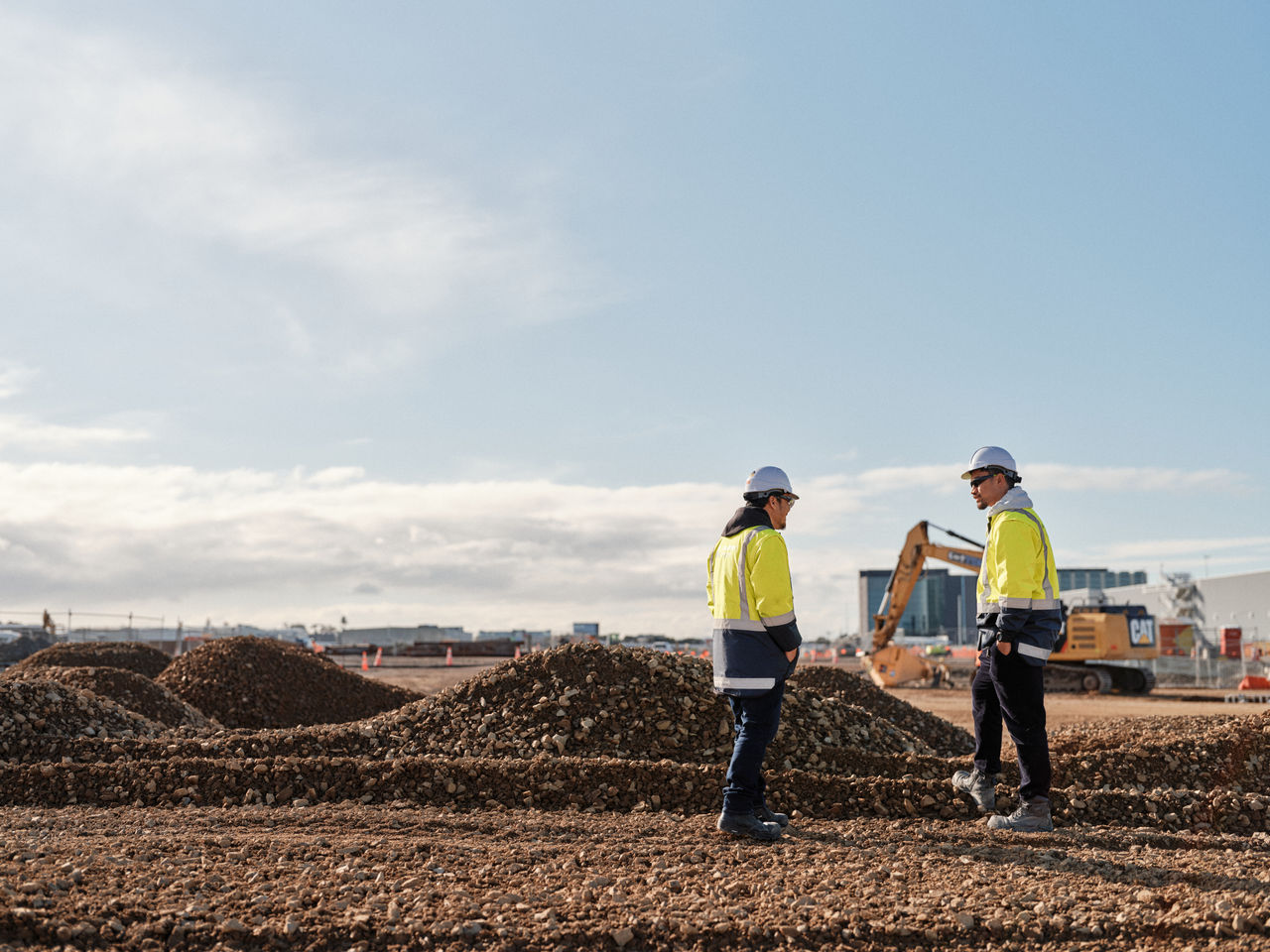
Airfield pavement renewals across our runway and taxiways are essential to keep the airport airfield fit for purpose. Over the past few years, we have replaced hundreds of concrete slabs with robust pavement that incorporates properties for a longer life and better durability.
This has resulted in a mountain of old pavement but rather than being sent offsite as waste, 108,000 tonnes of concrete that previously formed the airport’s runway touchdown zones is being crushed up and repurposed as backfill for 250,000m2 of new airfield, the expansion of which is to enable construction of the new integrated jet terminal.
Alongside the emissions saved from a reduced need for cement production, re-purposing the concrete as engineered back-fill is projected to save approximately 3,900 disposal trips and a further 2,400 trips of imported fill material.